
Al Mukhtar United provides EV charger supply and installation in Oman for homes, offices, hotels, car parks, fleets and commercial sites, with AC and DC charging stations from Sungrow, ABB and Huawei. Because we are an electrical contractor as well as a solar installer, one team handles the charger, the electrical supply and the connection, from site survey to commissioning.
EV charging solutions we supply and install
- Home chargers for villas and houses
- Workplace and office charging for staff and visitors
- Hotels, malls and public car parks with multiple charging points
- Fleet charging for company vehicles and depots
- Solar-powered charging that pairs your chargers with a rooftop or carport solar system
Types of EV chargers: AC and DC
There are two types of EV charger. Which one you need depends mainly on how long the vehicle stays parked.
AC wall chargers
The charger supplies AC power and the car converts it on board. Suited to places where cars are parked for hours.
- 7.4 kW on a single-phase supply, typical for villas
- 11 or 22 kW on a three-phase supply, for offices, hotels and car parks
- Type 2 connector, wall or pedestal mounted
- Usually connects to the existing distribution board on a dedicated circuit
DC fast chargers
The charger converts the power itself and feeds the battery directly, so charging is much faster.
- 30 to 50 kW for fleets, showrooms and workplaces
- 120 to 180 kW for public and fuel stations
- 200 kW and above for highways and high-traffic sites
- CCS2 connector, three-phase supply and, at higher powers, a dedicated feeder or transformer
Type 2 (AC) and CCS2 (DC) are the most common connectors on EVs sold in the GCC. Some imported models use GB/T, so we check your vehicles before recommending a charger.
Charger brands we supply: Sungrow, ABB and Huawei
We select the brand and model to suit your site, your vehicles and any solar system you already have.
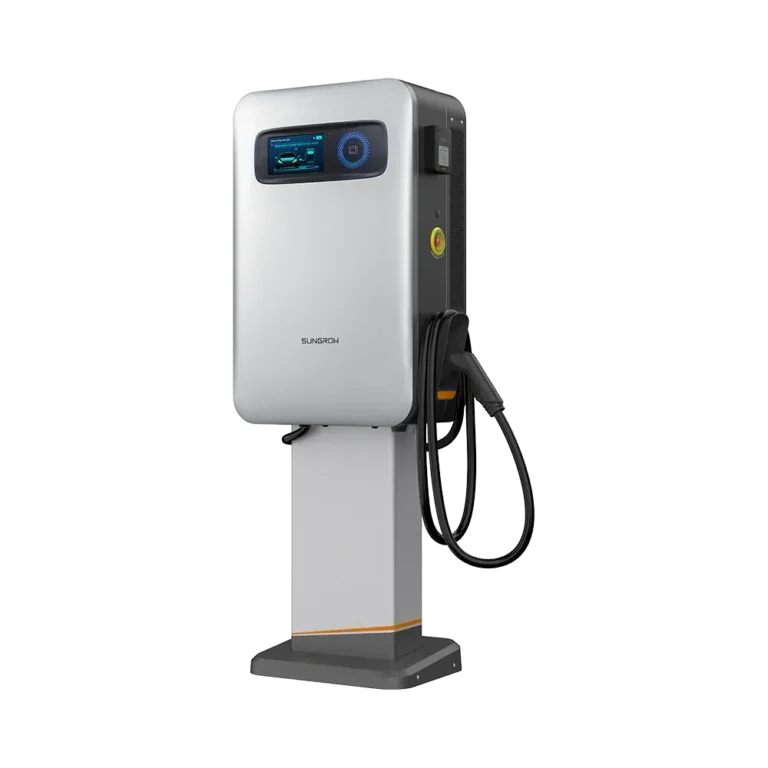
Sungrow
AC and DC chargers from a leading solar inverter manufacturer
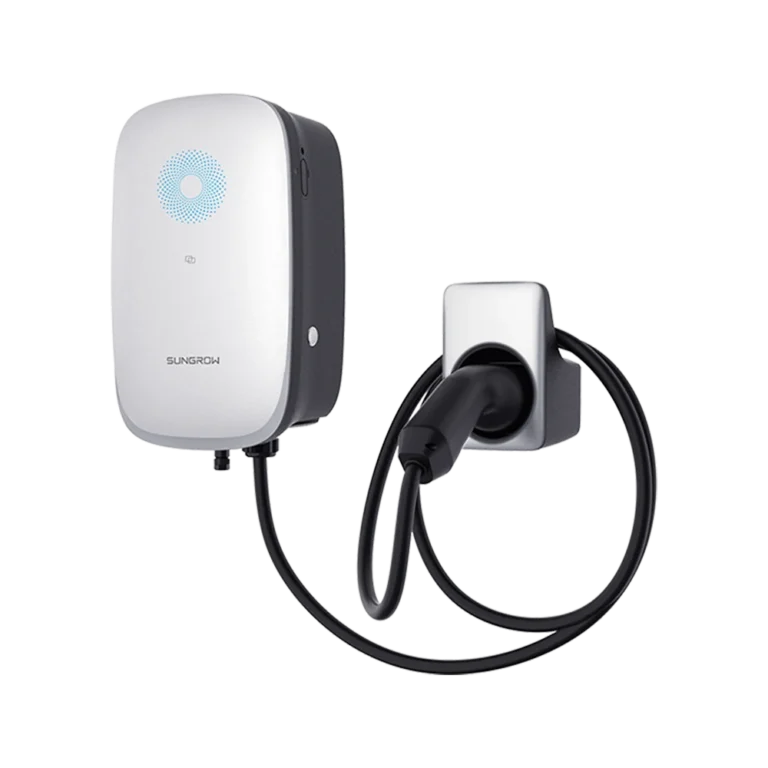
- IP65 and IK10 on the AC charger, for dusty and outdoor locations
- DC range: IDC30E (30 kW), IDC180E (120 to 180 kW) and IDC480E (360 / 480 kW)
- DC chargers with IP65 and C5 anti-corrosion protection, useful on the coast
- Part of Sungrow’s solar, storage and charger system, managed on the iEnergyCharge platform
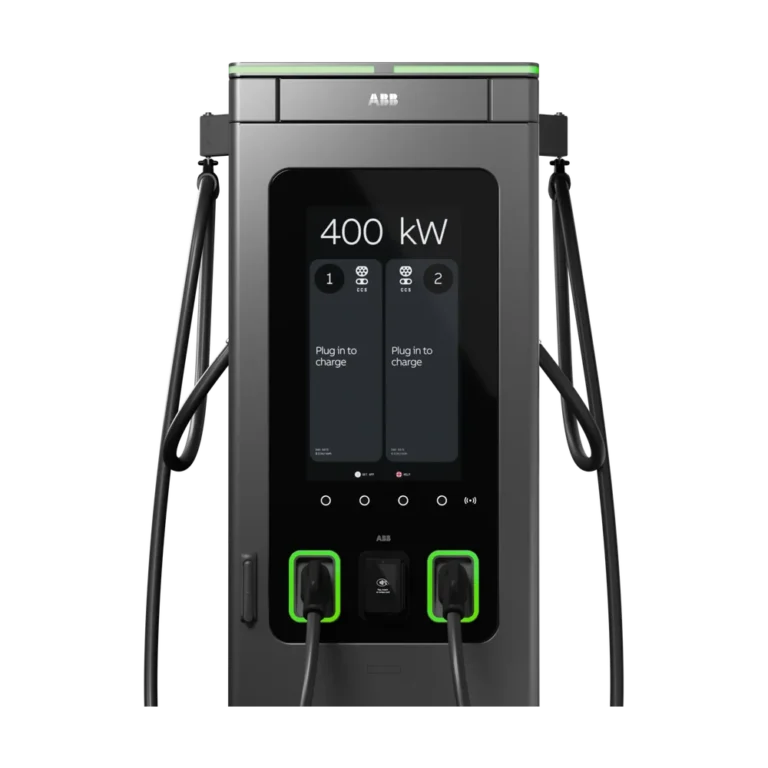
ABB
From the Terra AC wallbox to 400 kW public chargers
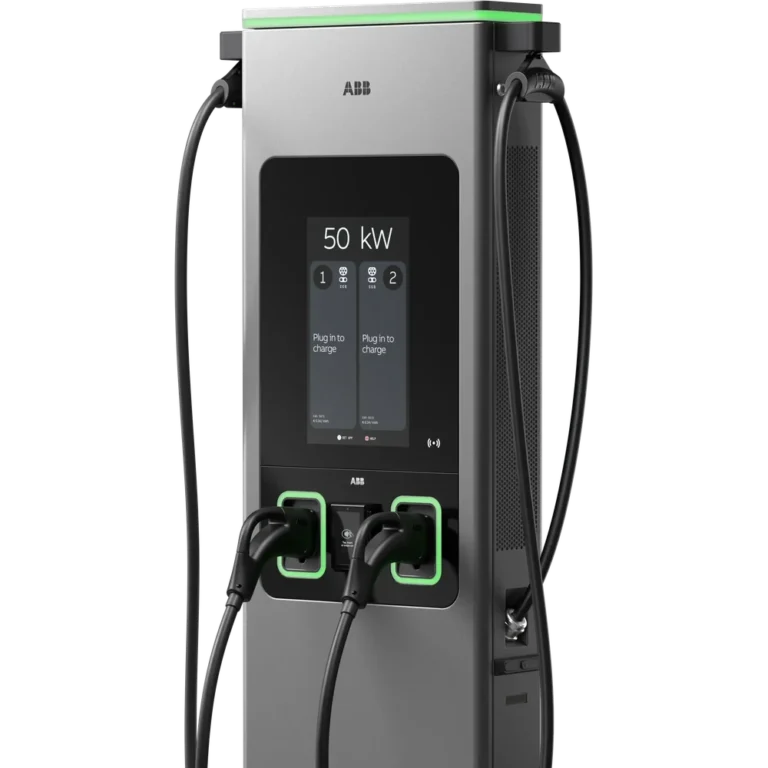
- Terra AC wallbox: 7.4 kW single-phase or up to 22 kW three-phase, IP54 and IK10
- T184: up to 180 kW, charges one or two vehicles at once
- C50 and A400 operate from -30 to 55 °C with derating
- OCPP 1.6J and 2.0.1 on the C50 and A400 for charging networks
Huawei
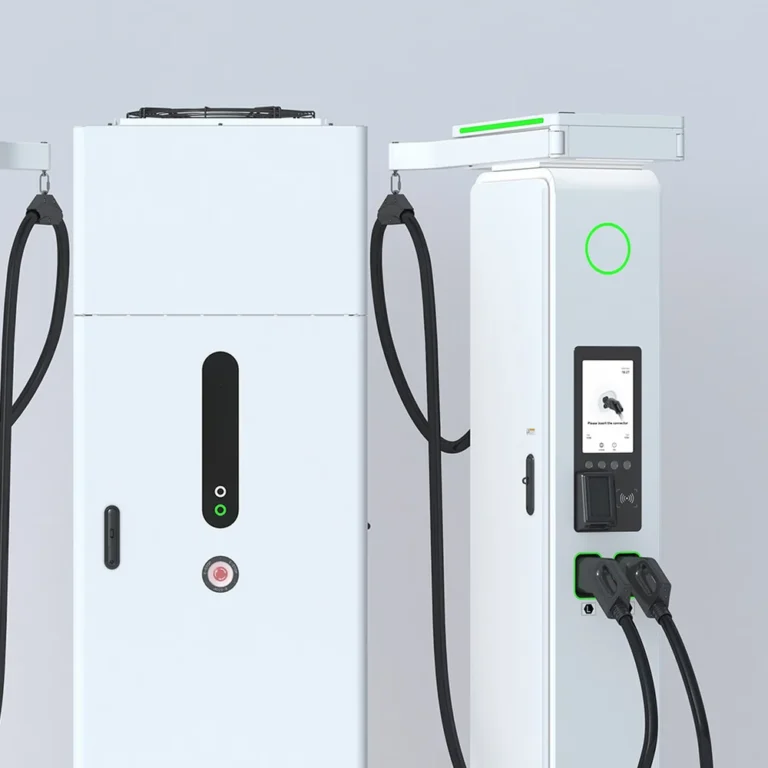
Home Smart Charger and FusionCharge DC systems
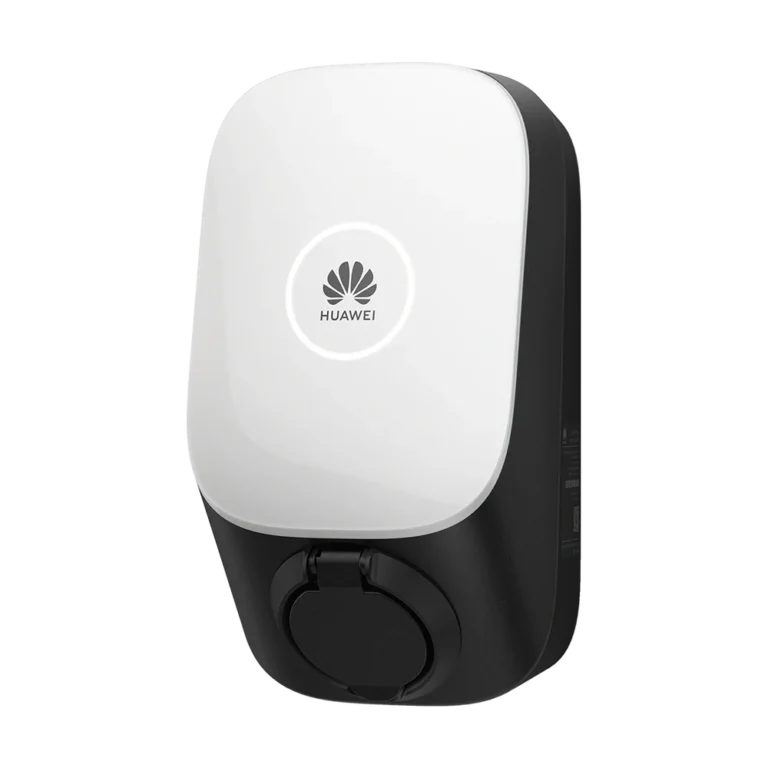
- PV Power Preferred mode charges from surplus solar with a Huawei FusionSolar system
- Built-in Type A 30 mA and 6 mA DC leakage protection
- Compact AC unit of about 3 kg, IP54 and IK10
- FusionCharge: power unit up to 720 kW, liquid-cooled dispensers up to 600 kW
Sungrow vs ABB vs Huawei: EV charger comparison
The tables compare the published specifications of the main models. The right choice depends on your site, so we confirm the model after the site visit.
AC wall chargers for homes, offices and hotelsSwipe sideways to see all brands
| Specification | SungrowAC22E-01 | ABBTerra AC wallbox | HuaweiSmart Charger 7KS-S0 / 22KT-S0 |
|---|---|---|---|
| Charging power | 7.4 kW single-phase; 11 or 22 kW three-phase (configurable) | Up to 7.4 kW single-phase; up to 22 kW three-phase | 7KS-S0: 1.4 to 7.4 kW; 22KT-S0: up to 22 kW |
| Maximum current | 32 A | 32 A | 32 A |
| Vehicle connection | Type 2 cable (5 m or 7 m) or socket version | Type 2 socket or attached cable | Type 2 socket |
| Protection rating | IP65, IK10 | IP54, IK10 | IP54, IK10 |
| Operating temperature | -30 to 50 °C | -35 to 50 °C | 7KS-S0: -35 to 45 °C; 22KT-S0: up to 50 °C at 16 A, 40 °C at 32 A |
| Leakage protection | Built-in 6 mA DC detection; external RCD and MCB required | Built-in 30 mA AC and 6 mA DC protection | Built-in Type A 30 mA and 6 mA DC protection |
| Connectivity | Wi-Fi, Ethernet, 4G, RS485 | Wi-Fi, Ethernet, Bluetooth, RS485; 4G on some variants | Wi-Fi, Ethernet, Bluetooth |
| OCPP | 1.6J | 1.6 | 1.6 (residential use) |
| User access | Plug and play, RFID card or app | App or RFID | RFID card, app or Bluetooth |
| Load management | Yes, balances power across chargers | Yes, dynamic with an external energy meter | Yes, dynamic charging power |
| Solar charging | Within Sungrow’s solar, storage and charger system | Through an external energy meter or building energy system | PV Power Preferred mode with Huawei FusionSolar |
| Stands out for | Highest dust and water protection of the three | Many variants, including 4G and socket or cable versions | Closest link to a home solar system |
DC fast chargers for fleets and public stationsSwipe sideways to see all brands
| Specification | SungrowIDC30E, IDC180E, IDC480E | ABBC50, T184, A400 | HuaweiFusionCharge |
|---|---|---|---|
| Power range | 30 kW; 120 to 180 kW; 360 / 480 kW | 50 kW; 180 kW; 200 / 300 / 400 kW | Power unit up to 720 kW; dispensers up to 250 kW (fast) or 600 kW (ultra-fast) |
| Output voltage | 200 to 1000 V DC (IDC30E) | 150 to 980 V DC (C50, A400) | Up to 1000 V DC |
| Maximum output current | 80 A (IDC30E) | 150 A (C50); 400 A peak (T184); 600 A peak on CCS (A400) | 500 A (liquid-cooled dispenser) |
| Cooling | Isolated air cooling | Air-cooled cables; cooled CCS cable on the A400 | Liquid-cooled power unit and dispensers |
| Layout | Standalone chargers | All-in-one chargers | Central power unit with separate dispensers |
| Typical use | Fleets and workplaces (30 kW); public stations (120 kW and above) | Retail and fleets (50 kW); public and highway stations (180 to 400 kW) | Large ultra-fast charging stations |
Specifications are taken from the manufacturers’ published datasheets and product pages, and can vary by model variant and region. We confirm the exact model and datasheet with every quotation. Product names and images belong to their respective manufacturers.
Which EV charger is right for you?
- Home with a Huawei solar system: the Huawei Smart Charger can prioritise surplus solar power.
- Outdoor, dusty or coastal sites: the Sungrow AC22E‑01 has the highest protection rating of the three AC chargers (IP65).
- Offices, hotels and car parks: ABB Terra AC or Sungrow AC22E‑01, both with OCPP 1.6 and 4G options for managed charging.
- Fleets and public fast charging: DC chargers sized to your vehicles and your available supply, from 30 kW units to 400 kW and above.
Our installation process
- Site visit: we check your parking layout, electrical supply and available capacity.
- Charger selection: we recommend the brand, model and connector type that match your vehicles and how you use them.
- Electrical design: dedicated circuits, cabling, protection and, where needed, a distribution board upgrade.
- Installation: supply and mounting of the chargers by our own electrical team.
- Testing and handover: commissioning, safety testing and a walkthrough of how to use the system.
Why choose Al Mukhtar United
- Registered Omani electrical contractor, working in the electricity sector since 2003
- In-house LV/MV electrical team, up to 11kV
- DCRP-approved solar installer (DCRP/SOLAR/008/23), so we can power your chargers from solar
- Head office in Salalah and a branch in Muscat
Learn more about our electrical contracting, LV and MV electrical works and solar energy services.
EV charger installation in Muscat, Salalah and across Oman
We install EV chargers in Muscat, Dhofar and other governorates from our branch in Ghala, Muscat and our head office in Salalah. Each installation is carried out by our own electrical team, alongside our electrical contracting work in Muscat and Dhofar.
Frequently asked questions
Can you install a charger at my home?
Yes. We survey your electrical supply, install a dedicated circuit and mount the charger, then test it before handover.
What is the difference between AC and DC EV chargers?
AC chargers (7.4 to 22 kW) rely on the car’s on-board charger and suit homes and workplaces where cars are parked for hours. DC fast chargers (30 kW and above) feed the battery directly and suit fleets and public stations.
Which is better: Sungrow, ABB or Huawei?
All three are established manufacturers. Sungrow has the highest protection rating on its AC charger (IP65), ABB offers the Terra AC wallbox and DC chargers from 50 to 400 kW, and Huawei links closely with its own solar systems. We recommend a model after the site visit.
How much does it cost to install an EV charger in Oman?
It depends on the charger type and power, the cable route from your distribution board and whether your supply needs an upgrade. We give a fixed quotation after the site visit.
Can my building’s electrical supply handle EV chargers?
It depends on your available capacity. During the site visit we check this and tell you if an upgrade is needed.
Can EV chargers run on solar power?
Yes. We can design a solar system sized to supply your charging, including solar carports. See our solar installation and commercial solar pages.
Do you install multiple chargers for a car park or fleet?
Yes. We design charging for several vehicles at once, including how the load is shared across the chargers.
Request a site visit
Tell us about your property and how many vehicles you need to charge, and we will arrange a site visit from our head office in Salalah (Commercial Area, Center Market) or our Muscat branch (Ghala). Call or WhatsApp +968 9880 4442 or use our contact form.